OFM
Order of Friars Minor
Province of St. Thomas the Apostle, India
Joy is Being Franciscan
Joy is Being Franciscan
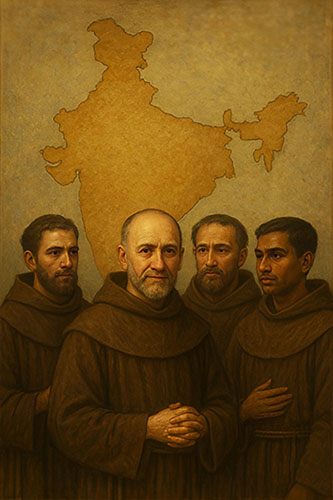
The Franciscan story in India is one of the most ancient and enduring in the Catholic world, a tapestry woven with threads of pioneering zeal, martyrdom, suppression, and rebirth. It is a history that spans from the medieval trade routes to the modern metropolis, a living legacy of faith and fraternity.
The first Franciscans arrived in India not with the Portuguese armadas, but decades earlier, via the overland trade routes of the Mongol Empire.
Blessed John of Monte Corvino (1247-1328): A Franciscan priest, John was the first recorded Franciscan to come to India. As his original letter states, he departed Persia in 1291 and "remained in the country of India, wherein stands the church of St. Thomas the Apostle, for thirteen months," baptizing about one hundred people before proceeding to China, where he became the Archbishop of Peking.
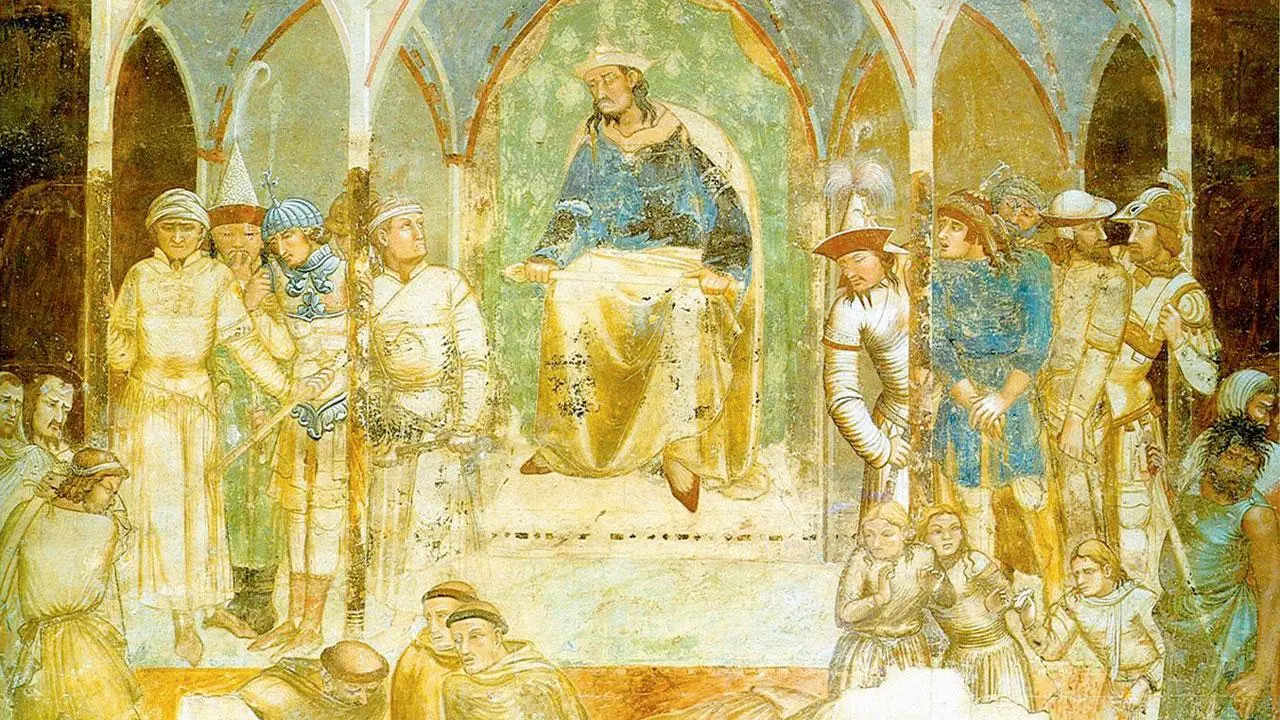
The Martyrs of Thane (1321): Responding to John's call, four Franciscan missionaries—Fr. Thomas of Tolentino, Fr. James of Padua, Fra. Peter of Siena, and Br. Demetrius of Tiflis—were traveling to China when their ship was diverted to Thane, near Mumbai. There, they were martyred on April 9, 1321, for their faith. Fr. Thomas of Tolentino was declared a Blessed in 1894. Their relics are kept in the Church of St. John the Baptist in Thane, a church older than the Taj Mahal.
John De Marignolli (c. 1346): A papal legate to China, this Franciscan bishop stopped in Quilon on his return journey. He lived there for over a year, preached in St. George's Church, and erected a marble pillar with a cross at Cape Comorin.
The Franciscan presence became institutionalized with the dawn of the Age of Exploration.
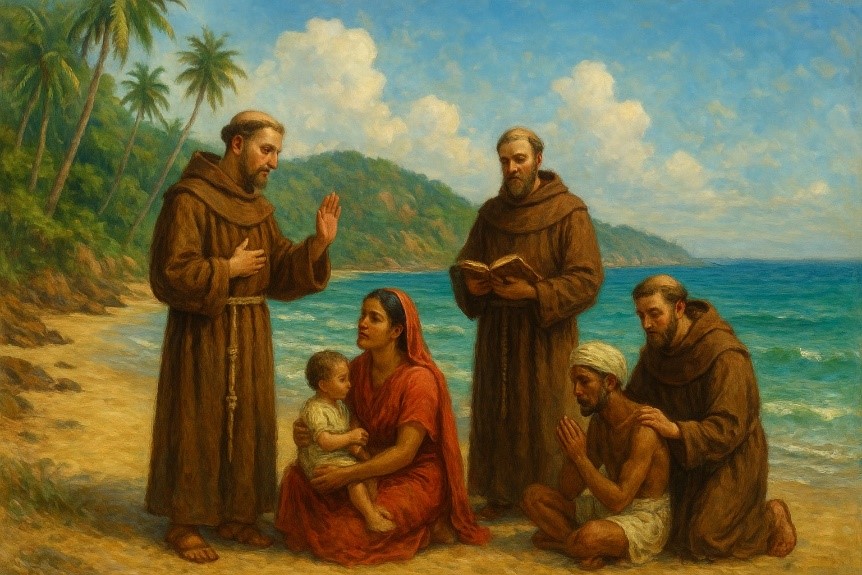
First Arrival with Cabral (1500): Eight Franciscans, led by Henrique Soares of Coimbra, arrived with Pedro Álvares Cabral's fleet. Though some were martyred in a riot in Calicut, the survivors established a base in Cochin.
Formal Foundations (1518–1542): The Franciscan Commissariat of India was formally erected in 1518 under Antonio do Louro. In 1542, it was elevated to the St. Thomas Custody.
Spiritual Renewal & Growth (1569): The Mother of God Friary at Daugim (Goa) was inaugurated as a house of stricter observance, or Retiro, fostering a spiritual renewal within the Order.
Provincial Status (1612–1622): The mission grew into two full-fledged provinces: the Province of St. Thomas (erected 1612, re-erected 1619) and the Province of the Mother of God (erected 1622). They established residences, seminaries, and mission stations across India.
Suppression (1835): After more than three centuries of work, both ancient provinces were suppressed by order of the Portuguese government, scattering the friars and ending an illustrious chapter.
A century after the suppression, the Franciscan charism was re-planted in India through new missionary efforts.
The English Foundation (1925): The mission to India began in 1925 when three Friars from the then Province landed at Bombay and moved to Hyderabad, where they were given the area of Bellary as their mission field. Over the years thirty-three friars from Britain joined this mission. Their leadership was so effective that in 1949, the mission was elevated to a diocese, with Friar John Hogan, OFM, becoming its first bishop. The last one was Joachim Tinneny, who joined the mission in December 1956 and died on 22 November 2009, having been the lone survivor in India for the past 23 years. He worked for many years in Karnataka, South India, collaborating with many parish-based ministries and groups.
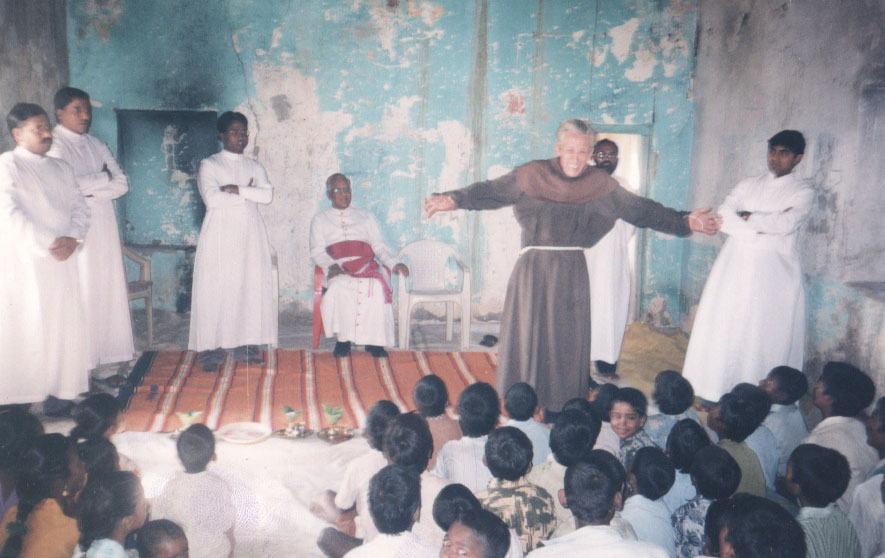
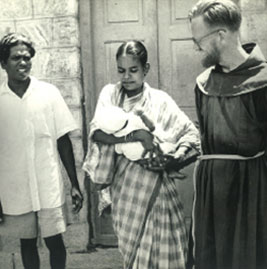
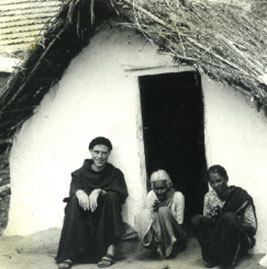
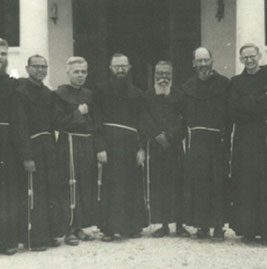
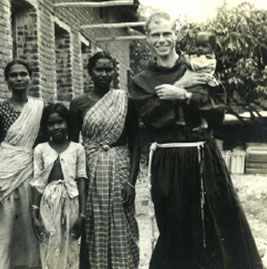
The Dutch Mission and the Bangalore Foundation (1935-1948): The Dutch Franciscan Province took charge of the Mission of Sind and Baluchistan in 1935. Following the partition of India in 1947, the friars sought a new headquarters. After a positive dialogue with the Bishop of Bengaluru, Friar Ambrose Yeddanapalli secured a bungalow in the city. The first friars arrived on May 10, 1948. Founding of the New Province (1948): On May 20, 1948—the feast of St. Bernardine of Siena—Friar Dennis Boers celebrated the first Mass in the new Bengaluru friary. This date is celebrated as the founding day of the modern Province of St. Thomas the Apostle.
From a single friary, the new Franciscan presence experienced rapid growth, requiring constant adaptation to serve the people of India.
Expansion and Formalization (1949-1985): The mission expanded with friaries in Palamaner and beyond. The community grew in numbers and spiritual maturity, leading to its elevation first to a Commissariat (1949), then to a Vicariate (1972), and finally, on March 12, 1985, to the full dignity of a Province.
Restructuring for a New Millennium (2008): To foster deeper inculturation and focused missionary activity, the Province was restructured on November 29, 2008, creating two new entities:
o The Custody of Mary, the Mother of God (Central, Western, and Northern India).
o The Foundation of St. Francis of Assisi (Northeastern India).
c. 1291 – Bl. John of Monte Corvino, the first Franciscan, spends 13 months in India.
1321 – The Four Martyrs of Thane are killed for their faith.
1500 – First Franciscans arrive with Pedro Álvares Cabral.
1518 – Commissariat of India established.
1542 – St. Thomas Custody erected.
1612/1619 – St. Thomas Province erected and re-erected.
1622 – Mother of God Province erected.
1835 – Suppression of the ancient Portuguese-era Provinces.
1925 – English Friars re-establish presence in Hyderabad.
1935 – Dutch Franciscans assume mission in Sind and Baluchistan.
May 20, 1948 – Dutch friars found the new St. Thomas mission in Bengaluru, the founding of the modern province.
March 12, 1985 – The mission is elevated to the Province of St. Thomas the Apostle.
November 29, 2008 – The province is restructured, creating the Custody of Mary and the Foundation of St. Francis.
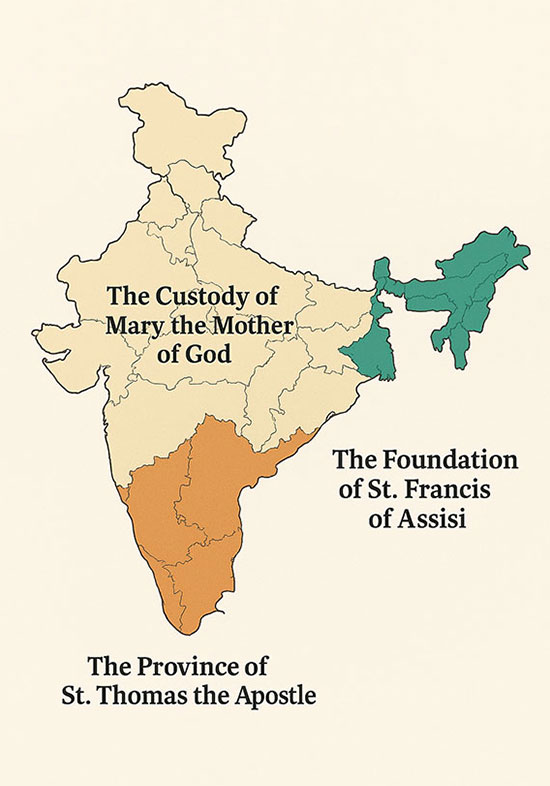
From the solitary journey of John of Monte Corvino to the vibrant, nationwide fraternity of today, the Franciscans in India have remained a steadfast witness to the Gospel, continually evolving to meet the needs of the time while staying true to the spirit of their founder, St. Francis of Assisi.