OFM
Order of Friars Minor
Province of St. Thomas the Apostle, India
Joy is Being Franciscan
Joy is Being Franciscan
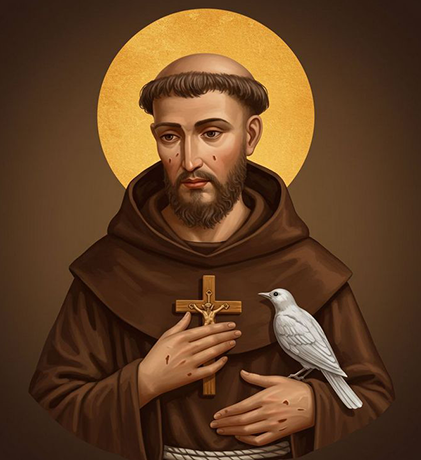
Francis of Assisi was born in Assisi, Italy, in 1181/1182. After a carefree youth, he converted, and from him the Order of Friars Minor, commonly known as the Franciscans, was founded. A young woman, Clare of Assisi, wanted to share his life choice, and from her was born the Order of the Poor Clares, who were later called the Poor Clares.
He also inspired the birth of the Third Franciscan Order, now called the Secular Franciscan Order. In 1219-1220, Francis traveled to Egypt, where he met the Sultan; this meeting also inspired the creation of the Custody of the Holy Land, the ancient Franciscan presence in Jerusalem and the holy places.
In 1224, on Mount La Verna, Francis received the stigmata. The following year he composed the Canticle of Brother Sun, a poetic prayer of praise to God, the creator of all things; this prayer and his respectful attitude toward creation inspired his proclamation (1979) as the patron saint of ecologists. Francis died on October 4, 1226, in Assisi and was declared a saint in 1228
The spirit of St. Francis of Assisi has inspired a worldwide family that transcends denominations. While the most prominent groups are within the Roman Catholic Church, there are also vibrant Old Catholic, Anglican, Lutheran, and ecumenical Franciscan communities.
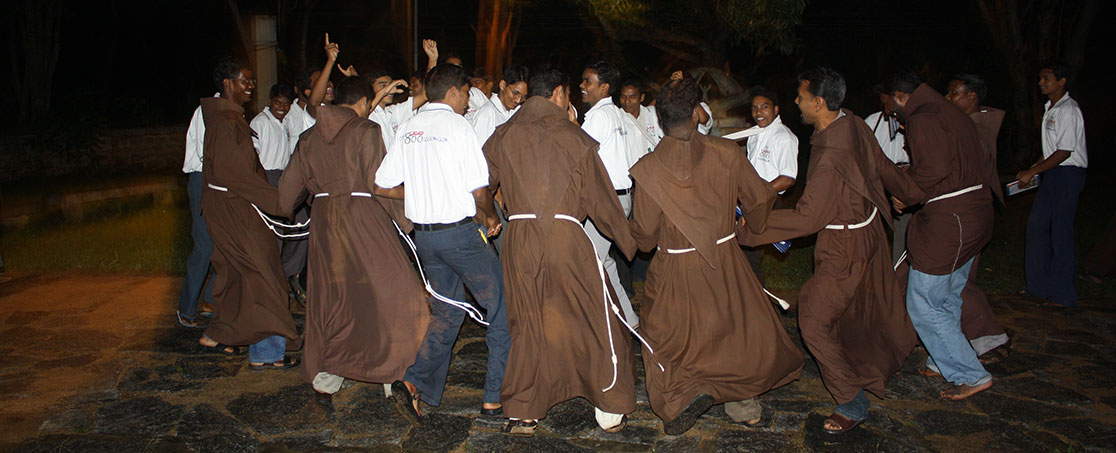
The followers of St. Francis are the men of the Order of Friars Minor (Ordo Fratrum Minorum). This "Order of Lesser Brothers" is a mendicant religious order, living by the Gospel and relying on the generosity of others. St. Francis referred to his followers as "Fraticelli," or "Little Brothers."
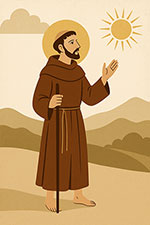
The Franciscan journey began in 1209, when a sermon on Matthew 10:9 inspired Francis to devote himself entirely to a life of apostolic poverty. Clad in a simple garment and barefoot, without staff or money, he began to preach repentance.
He was soon joined by his first companion, Bernardo di Quintavalle, a wealthy and prominent townsman who was deeply moved by Francis's radical witness. Seeking divine confirmation for this new way of life, the two men went to the Church of Saint Nicholas, where they prayed and asked for guidance. They opened the Bible three times, and in a moment that would define the Franciscan charism, their eyes fell upon three texts in sequence:
First, Matthew 19:21: “If you wish to be perfect, go, sell what you have and give to the poor.”
Second, Luke 9:3: “Take nothing for your journey.”
And finally, Matthew 16:24: “Follow me.”
This progression was a profound revelation. As recorded by St. Bonaventure, the message was unmistakable: first, to detach completely from worldly possessions; second, to live in total reliance on God's providence; and third, to make the following of Christ the sole purpose of their lives.
With this divine blueprint, Bernardo sold all his goods, giving the proceeds to the poor. Their radical witness drew others, and within a year, a small band of eleven brothers was formed. They lived in a deserted leper house near Assisi, spending their time traveling through Umbria, joyful in spirit but making a deep impact with their earnest preaching. Their life was defined by this radical embrace of Gospel poverty.
What secured the future of this unconventional brotherhood was their utter loyalty to the Church and clergy. This impressed Pope Innocent III, who saw in them an orthodox force for renewal. In a decisive audience, Francis received papal approval for his way of life, and the brothers were officially received into the Church, with Francis being ordained a deacon.
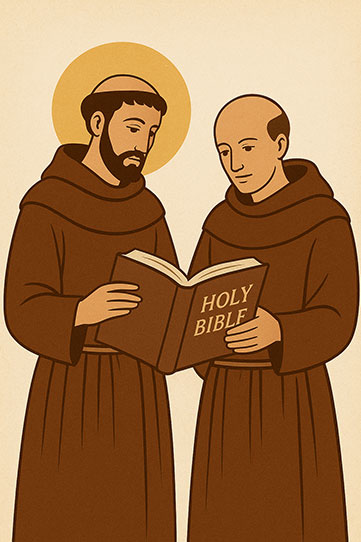
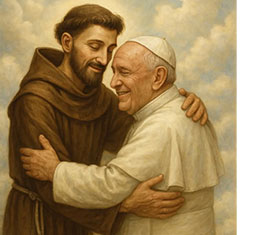
From its humble beginnings in the Italian countryside, the Franciscan charism has blossomed into a global mission. Today, Franciscan friars, sisters, and secular members live this Gospel-centered life in over 100 countries, serving God through a unique blend of fraternity and mission. They embody the same spirit that moved Francis and Clare—building community as a "brotherhood," and proclaiming reconciliation and peace through their deeds.
The enduring relevance of this form of life is powerfully attested to in our own time. When Cardinal Jorge Mario Bergoglio was elected Pope, his choice of the name Francis—a first in papal history—sent a clear message to the world. He explained he was inspired by St. Francis as "the man of poverty, the man of peace, the man who loves and protects Creation," a figure who is "like a vessel of my wish for a poor Church, for the poor." His papacy reflected this Franciscan spirit: from his profound encyclical on our care for our common home, Laudato Si'—whose title is taken from St. Francis's Canticle of the Creatures — to his call for universal fraternity and social friendship in Fratelli Tutti. His simple, pastoral style and focus on the peripheries evidence the urgent need for the Franciscan form of life and mission today.
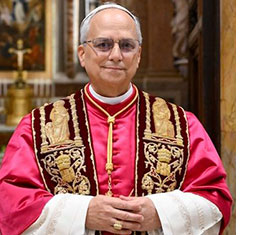
In his first encyclical, Dilexi Te, published in 2025, Pope Leo XIV points to St. Francis of Assisi and St. Clare as the towering figures of the Middle Ages who can still shed light on how we as Christians should carry out the mission with the poor, among the poor, as the poor. This profound acknowledgment powerfully underscores the timeless and urgent nature of the Franciscan witness for our world today.